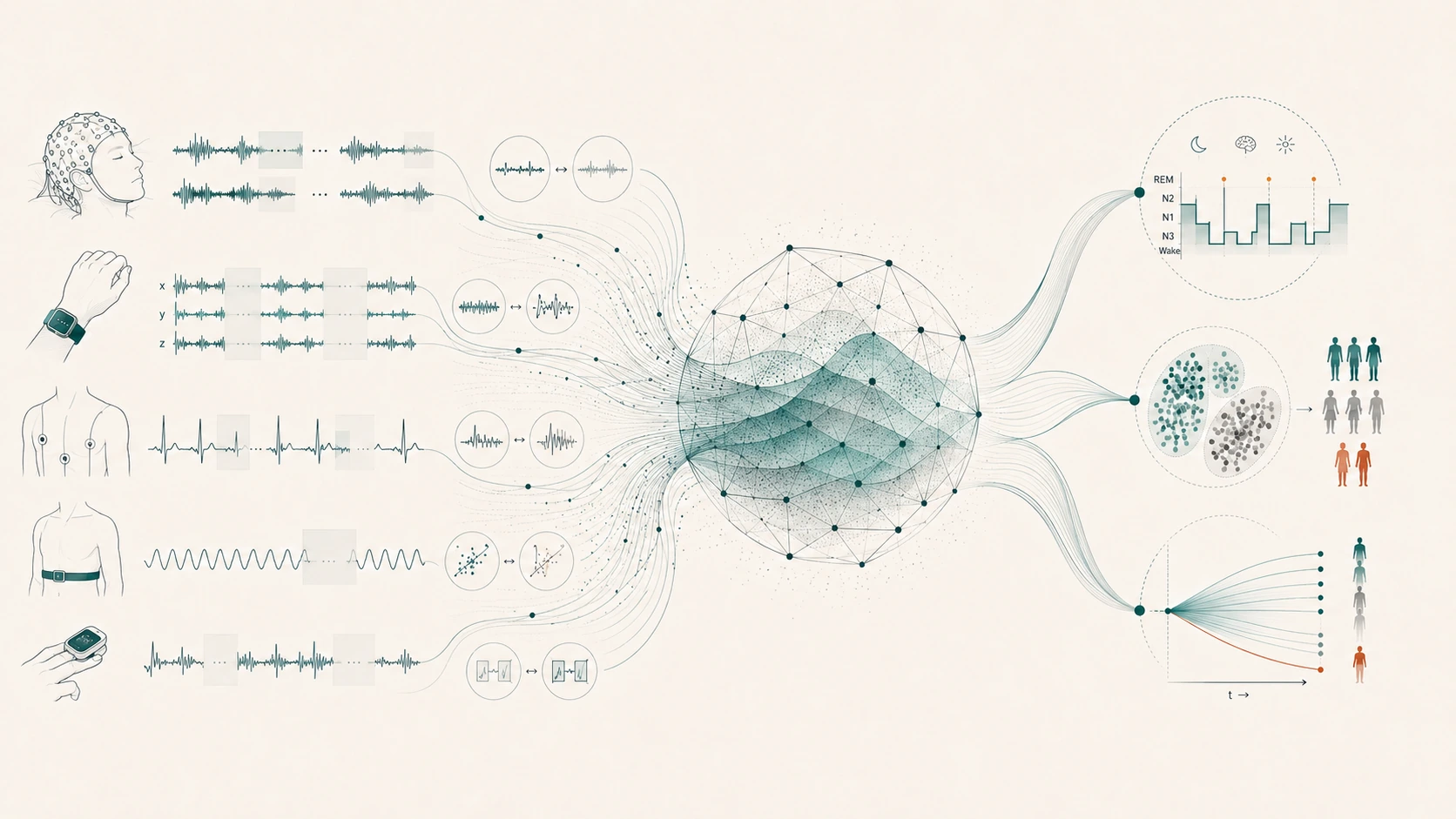
Illustration of five physiological signal sources — EEG, wrist accelerometer, chest ECG, respiratory belt, and pulse oximeter — each with a masked-and-reconstructed signal pair, converging into a shared latent-representation sphere that fans out into sleep staging, patient-similarity clustering, and future-risk trajectory outputs.

Physiological recordings — polysomnography, wrist accelerometry, and beyond — share underlying structure across cohorts, devices, and clinical tasks. This theme develops and evaluates self-supervised and foundation-model approaches that learn reusable representations across physiological modalities and downstream health outcomes, currently organized around two modalities.

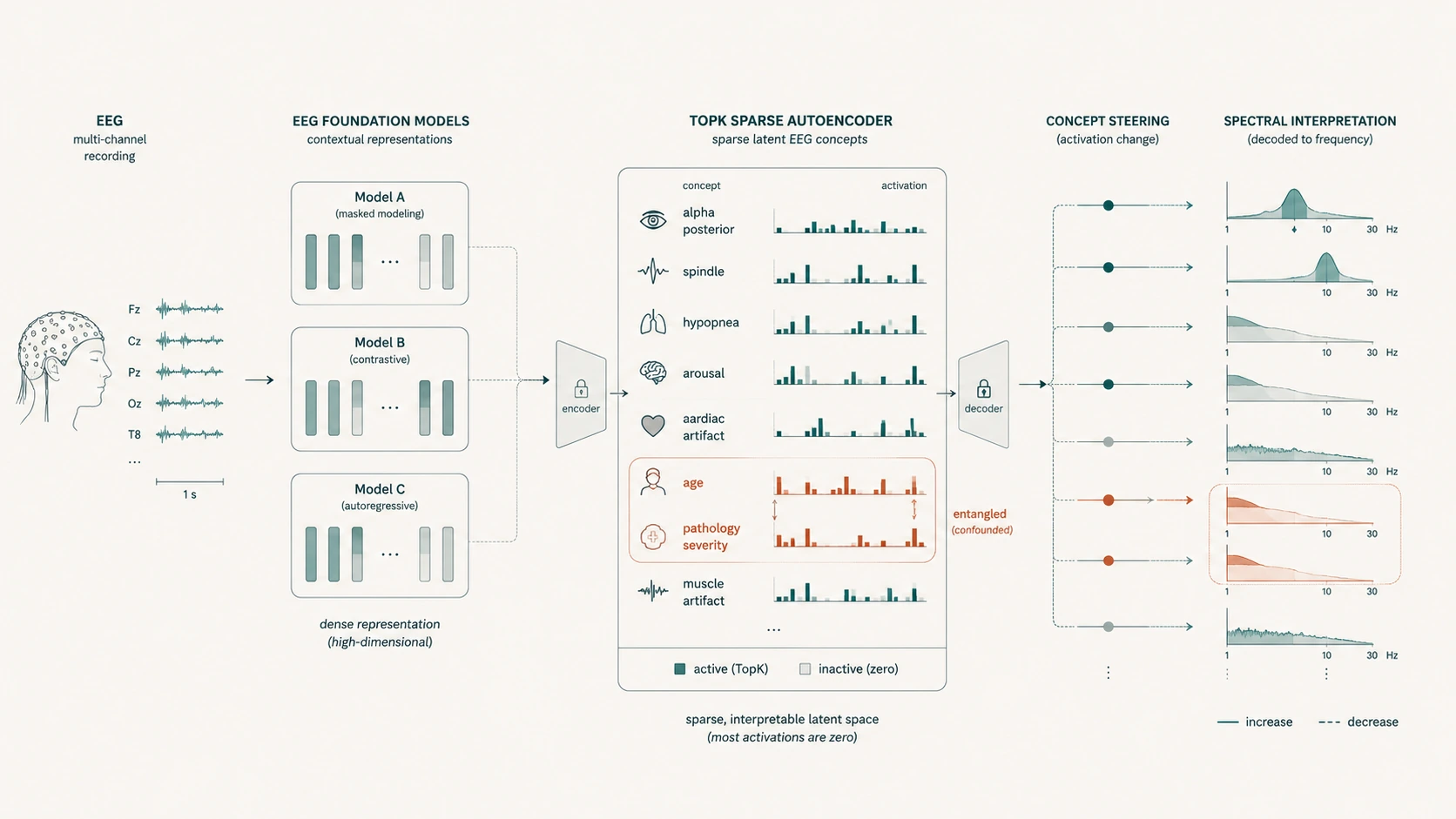
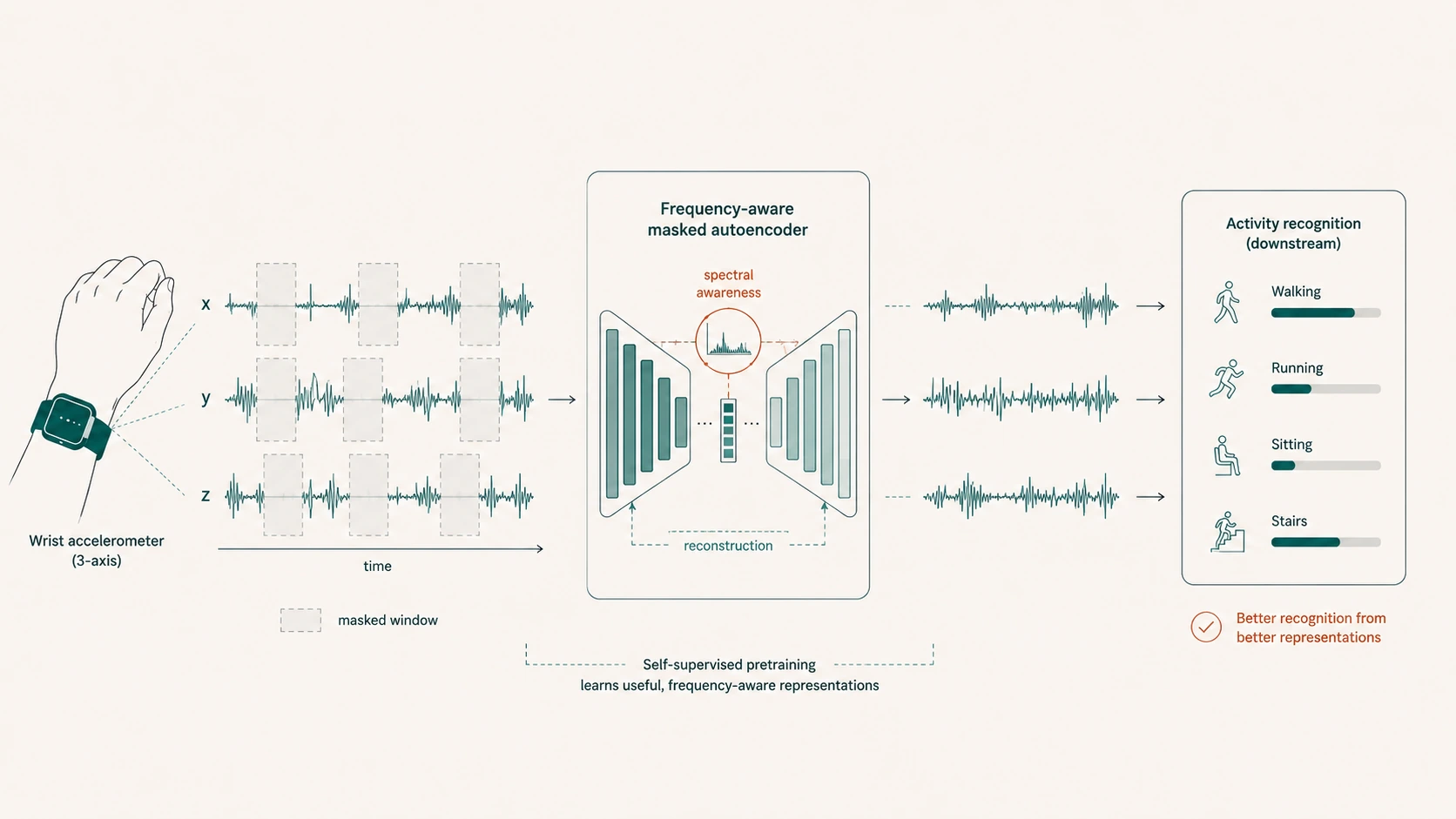
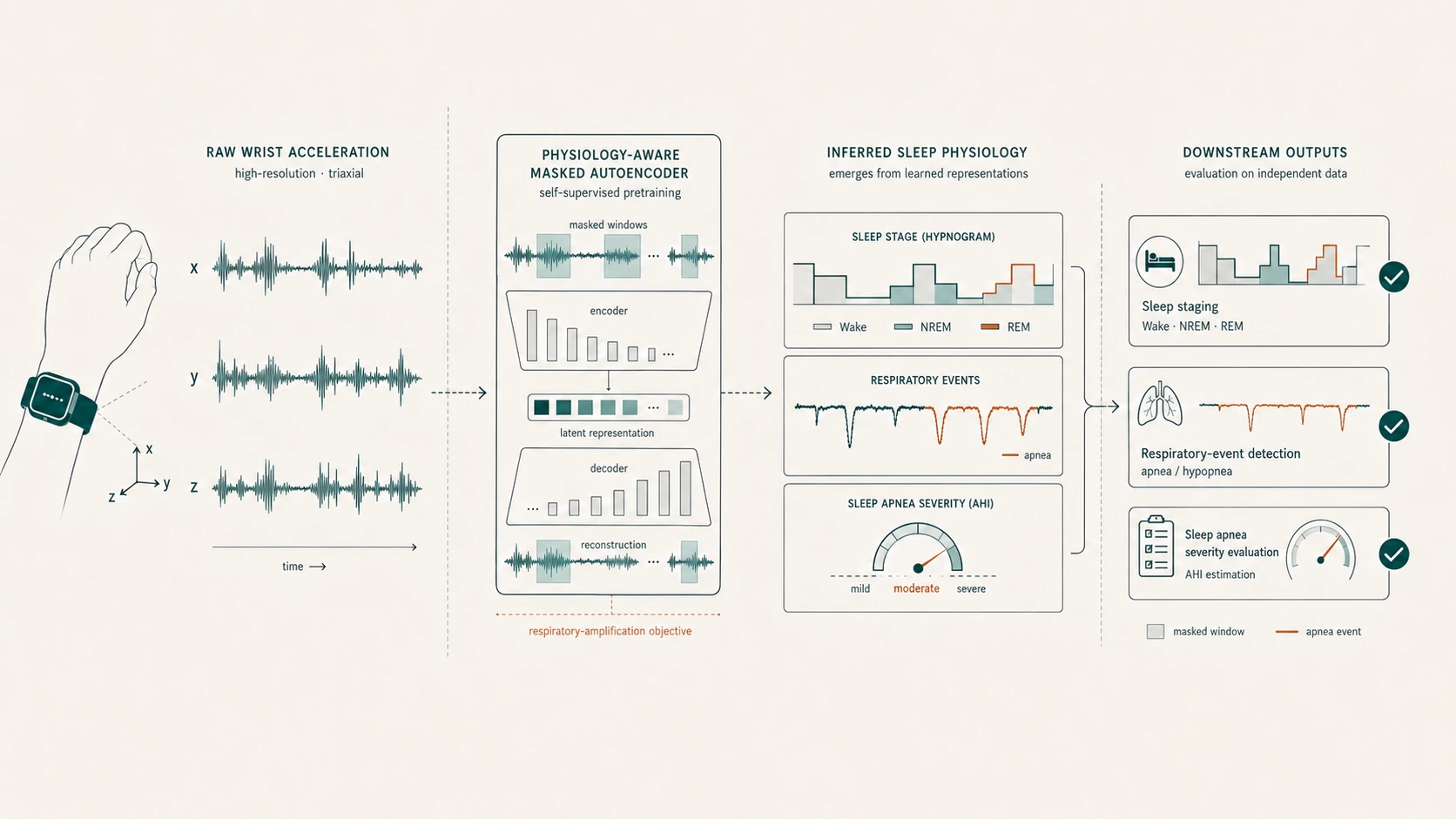
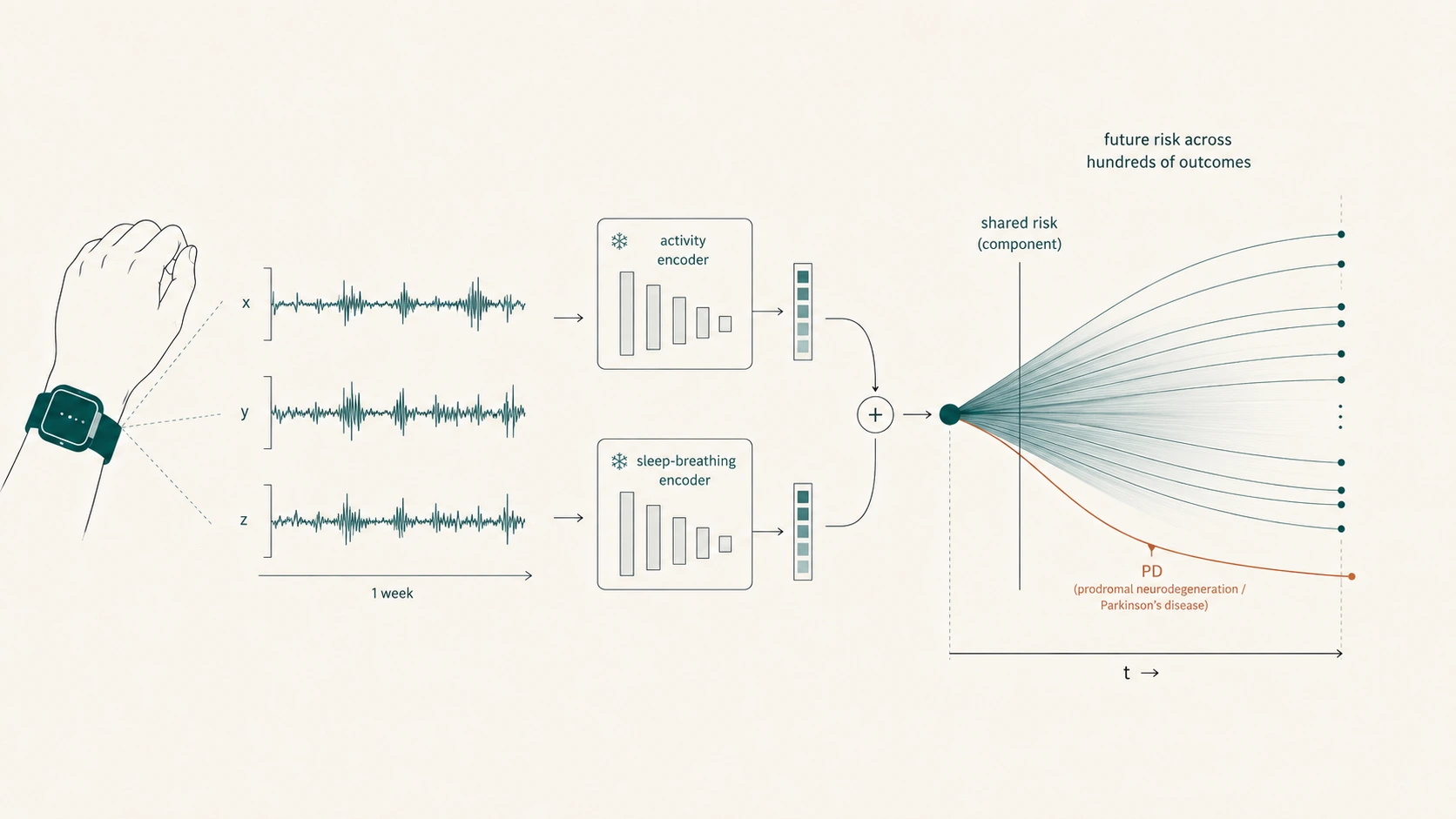
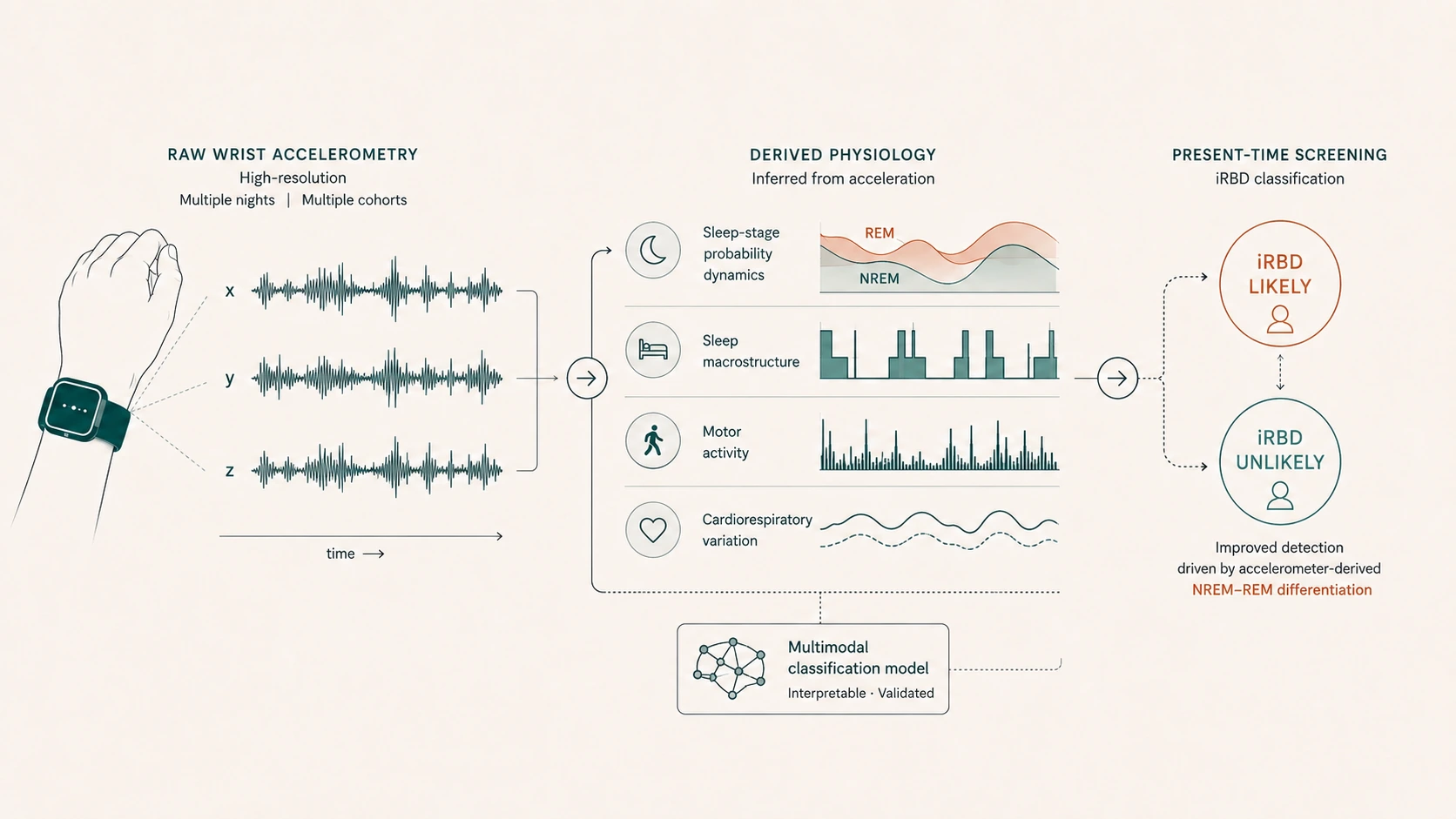
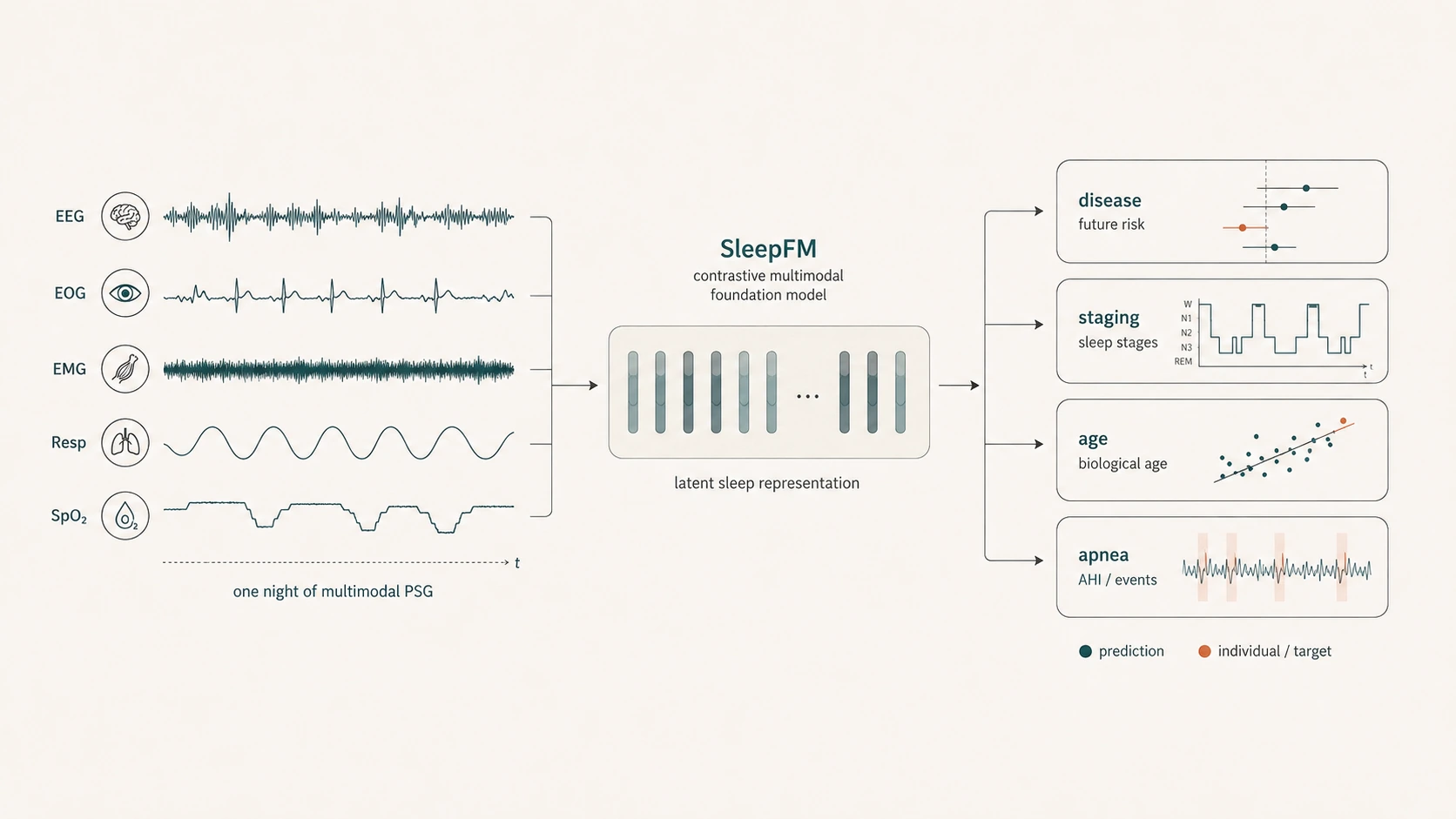
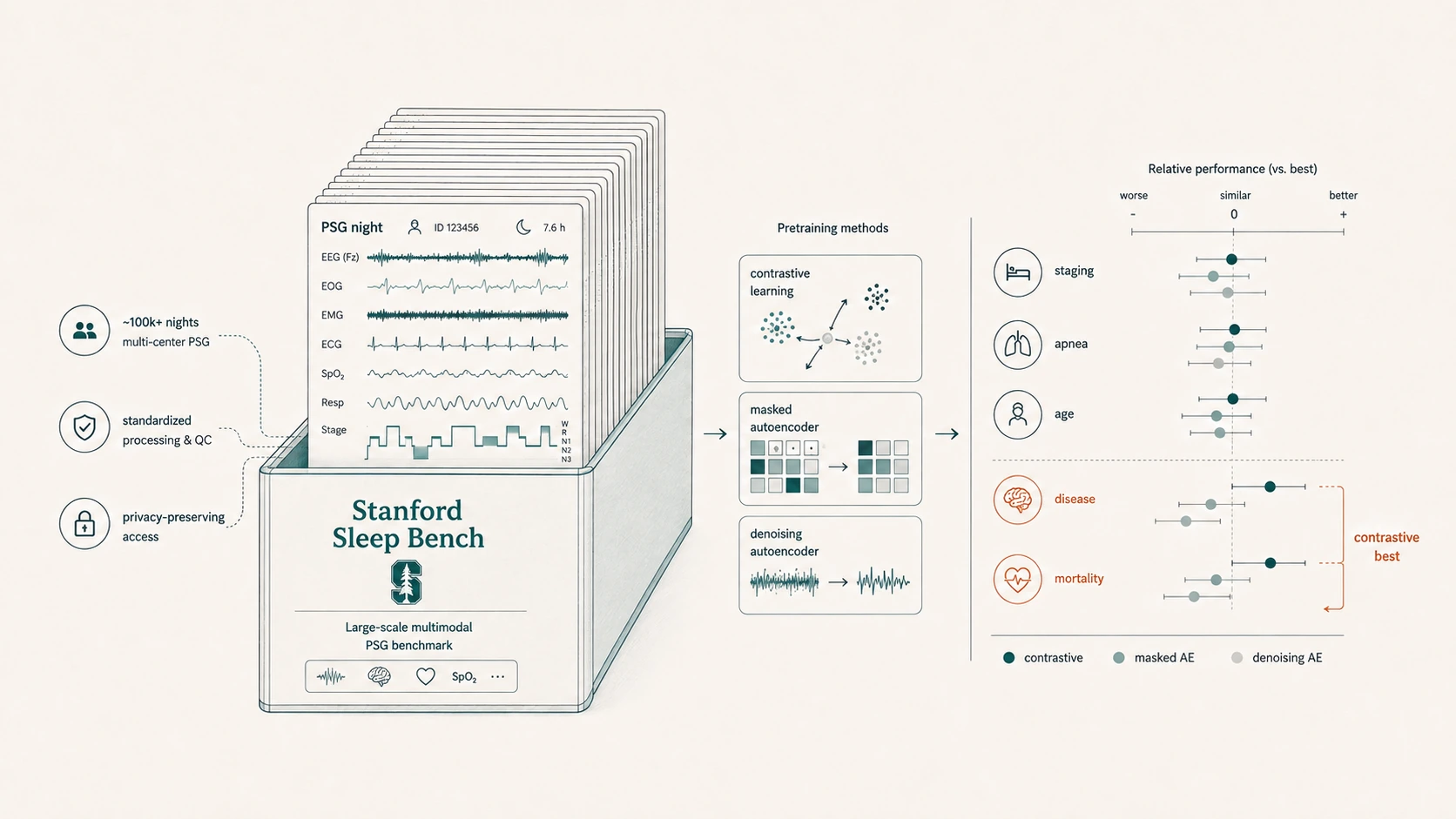
Foundation models for polysomnography apply this at very large scale to multimodal sleep recordings, learning representations transferable across disease and mortality prediction tasks. Foundation models for wrist accelerometry take the same approach to wearable data, with representations that transfer across human activity recognition, sleep staging, apnea evaluation, and future health-risk prediction — see also Wearables for scalable health assessment.
Foundation models for polysomnography

Large-scale representation learning from multimodal sleep recordings for transferable health and disease prediction — spanning the model itself, the pretraining methodology behind it, and work interpreting what it learns.

Foundation models for wrist accelerometry

Self-supervised and physiology-aware representation learning from wrist accelerometry, spanning human activity recognition, sleep staging, apnea evaluation, and future health prediction.

Also part of this theme

9 publications in this theme — View all 9 publications