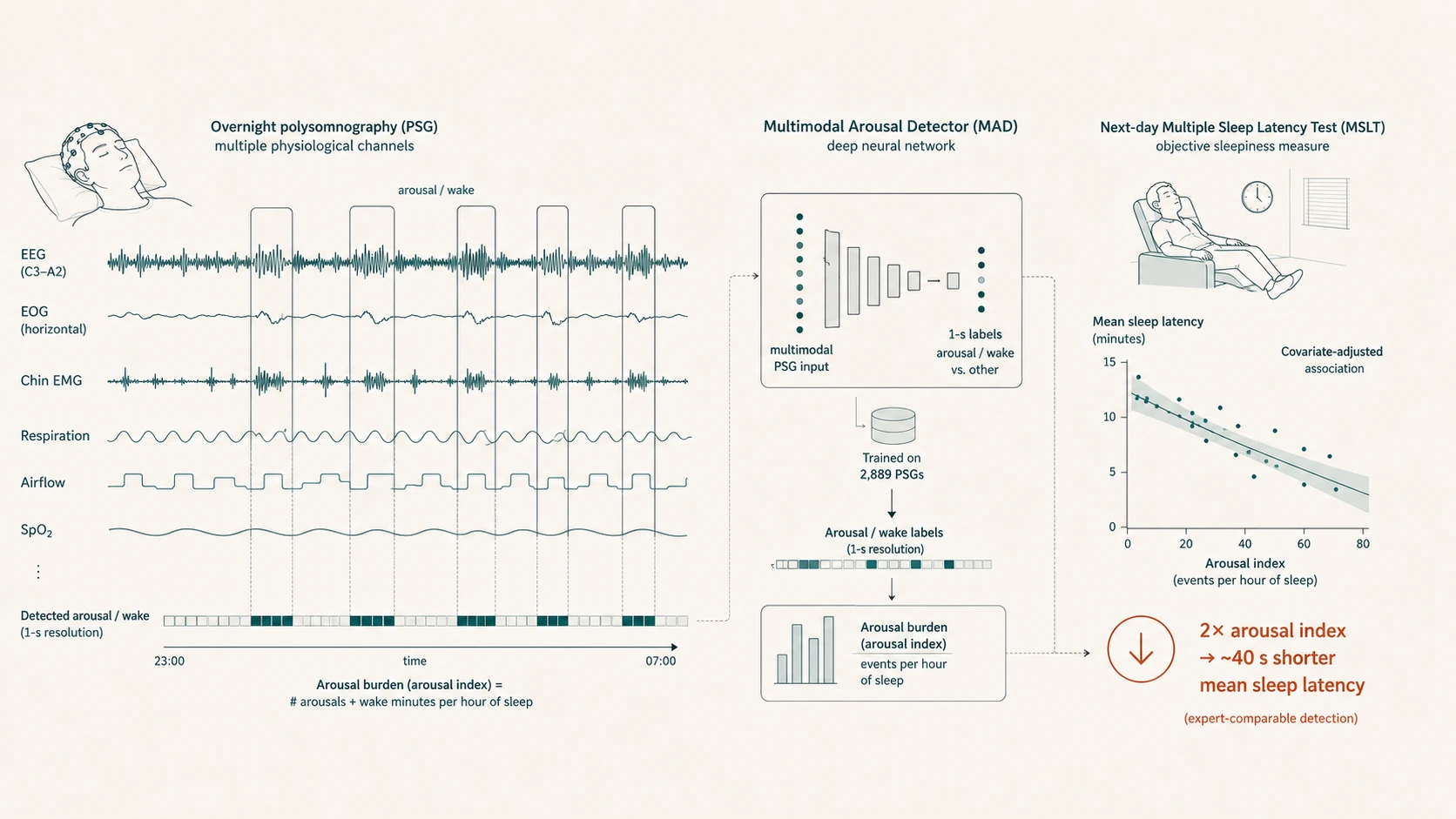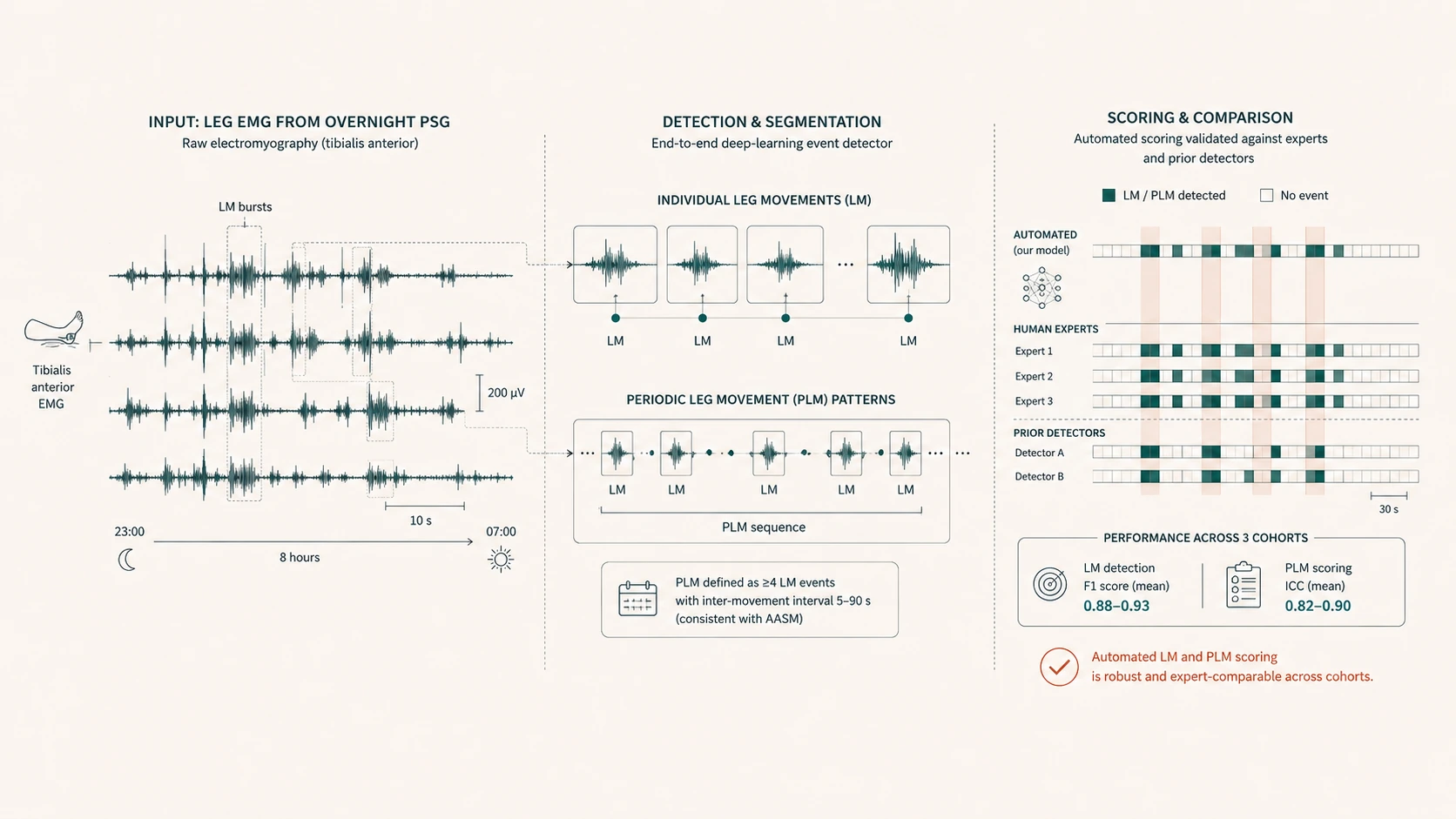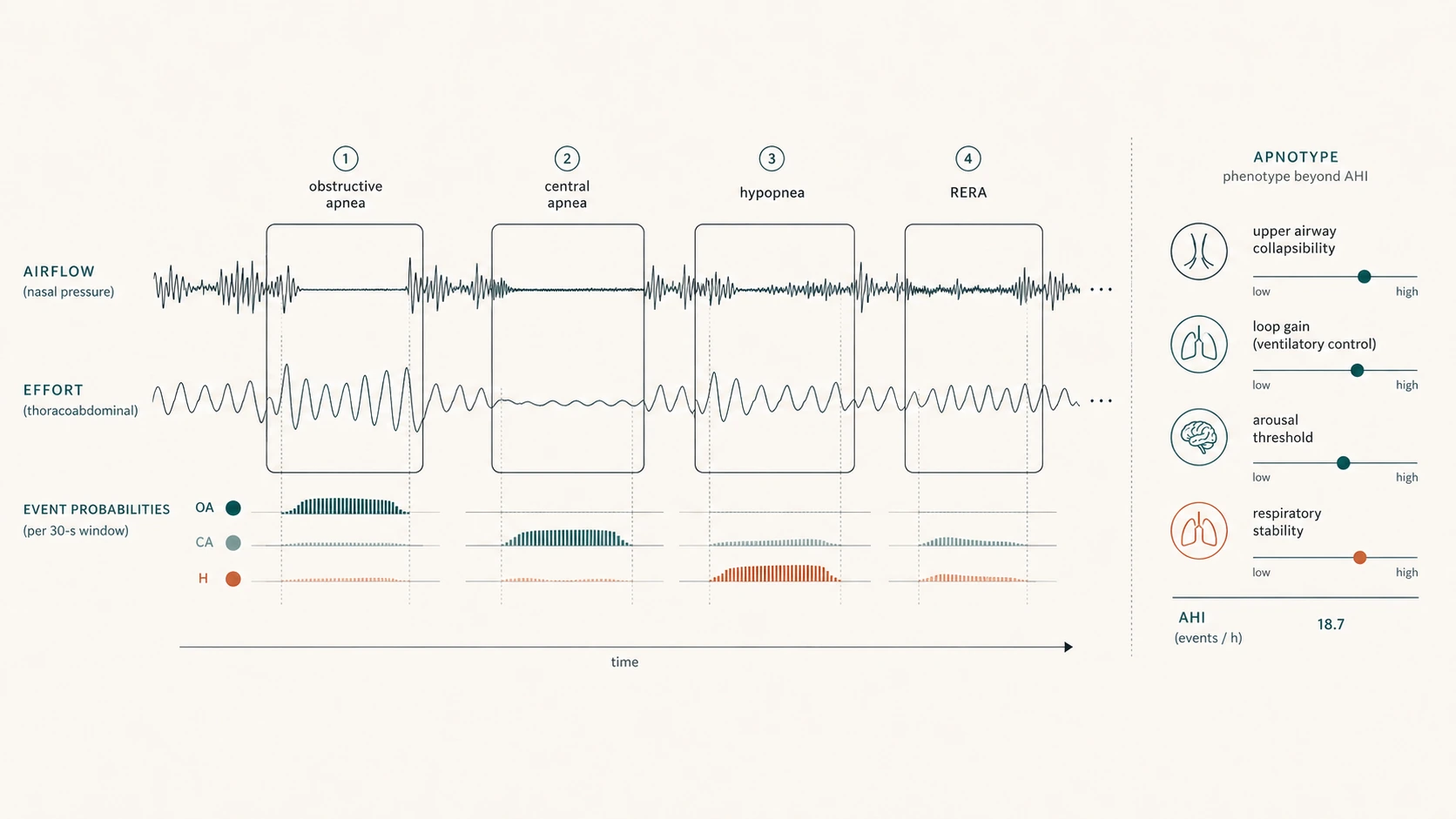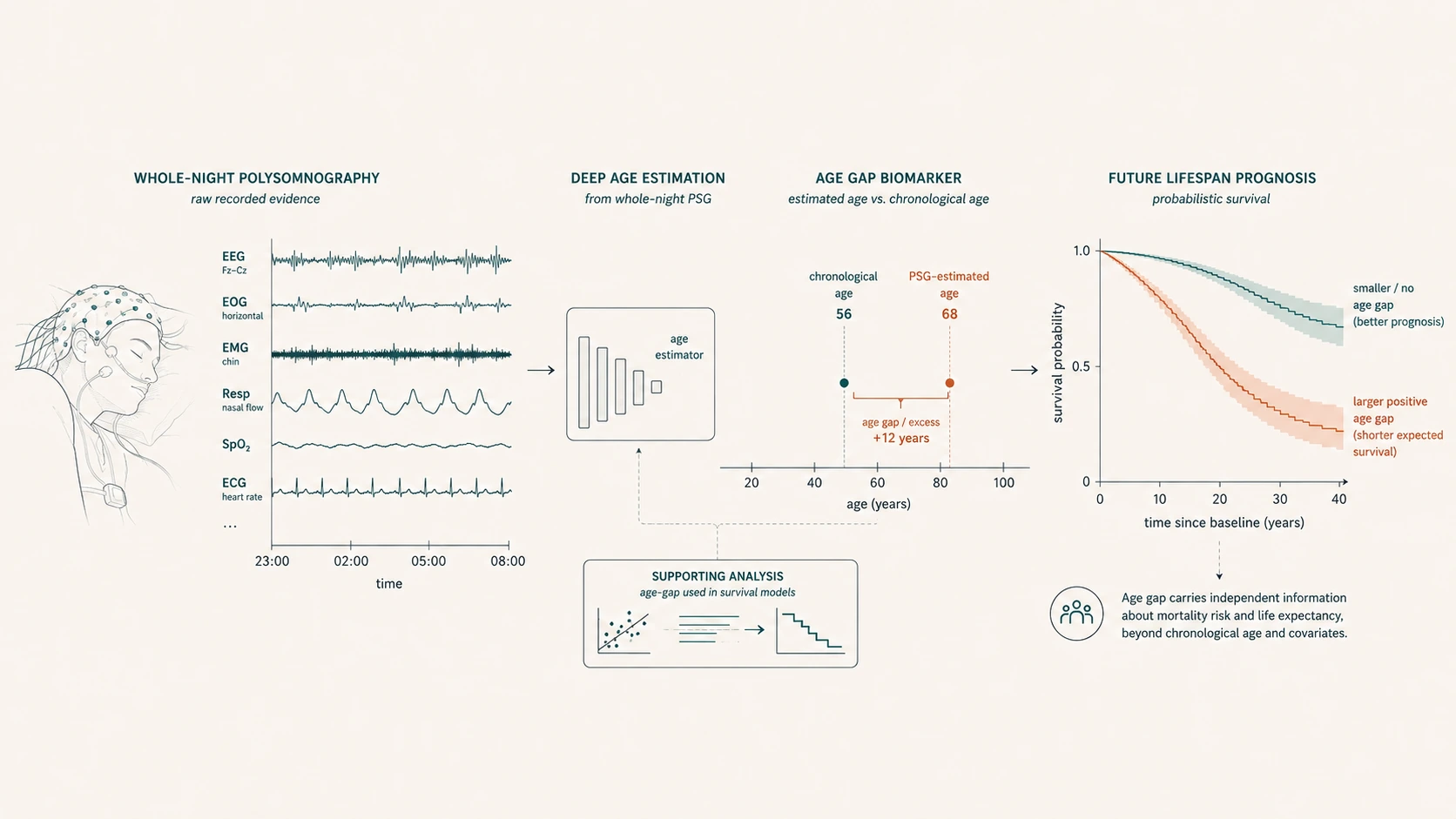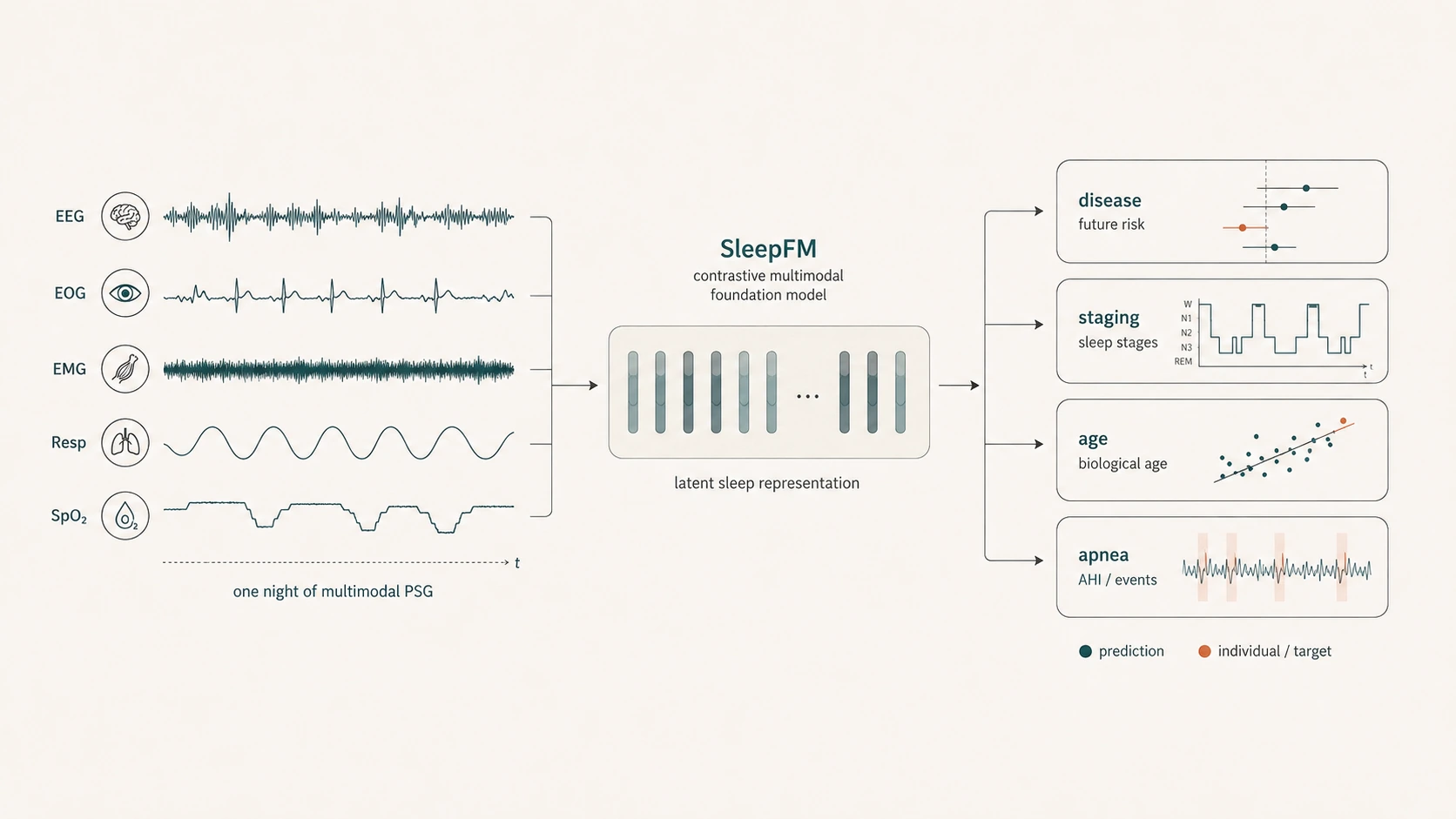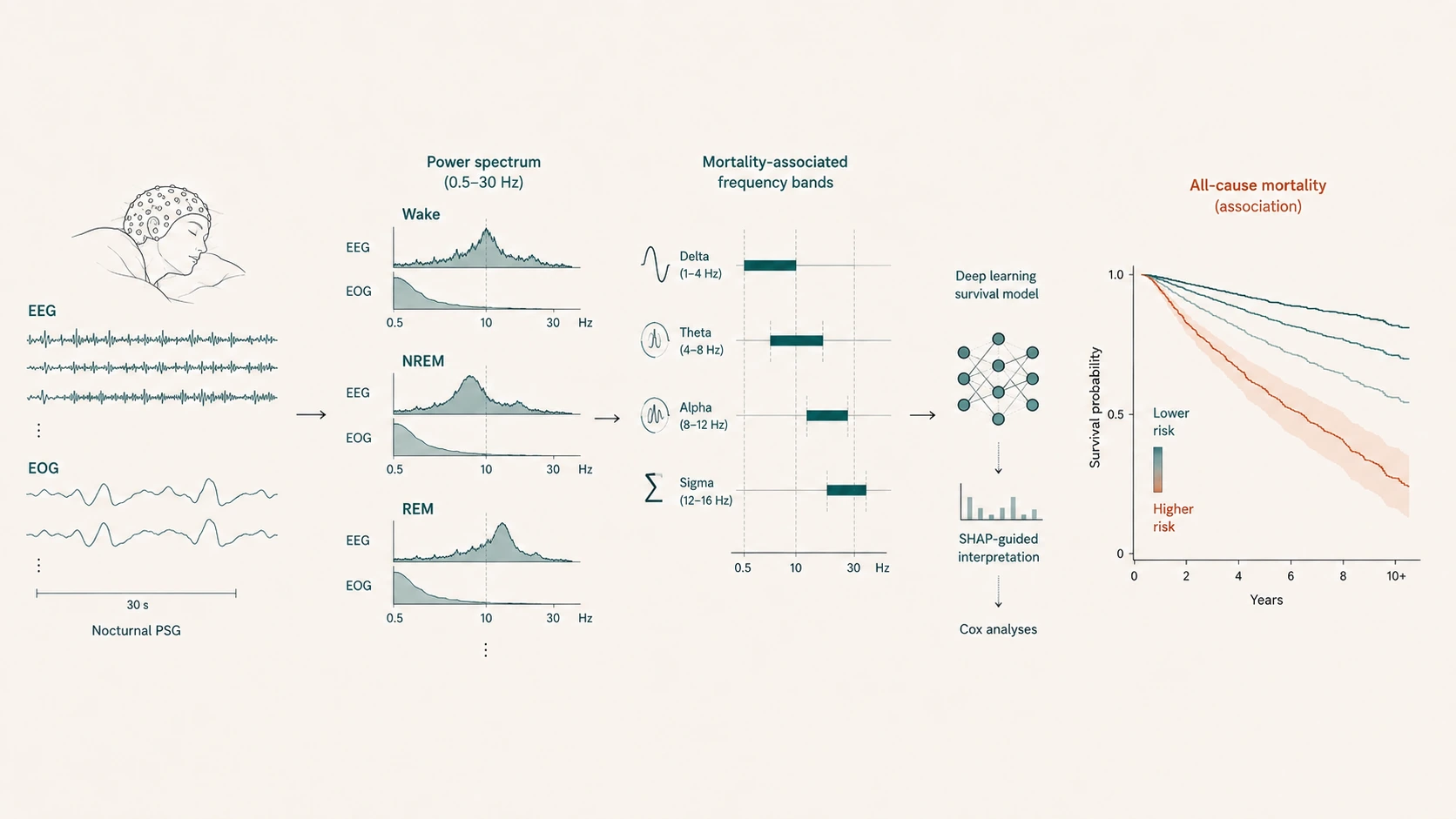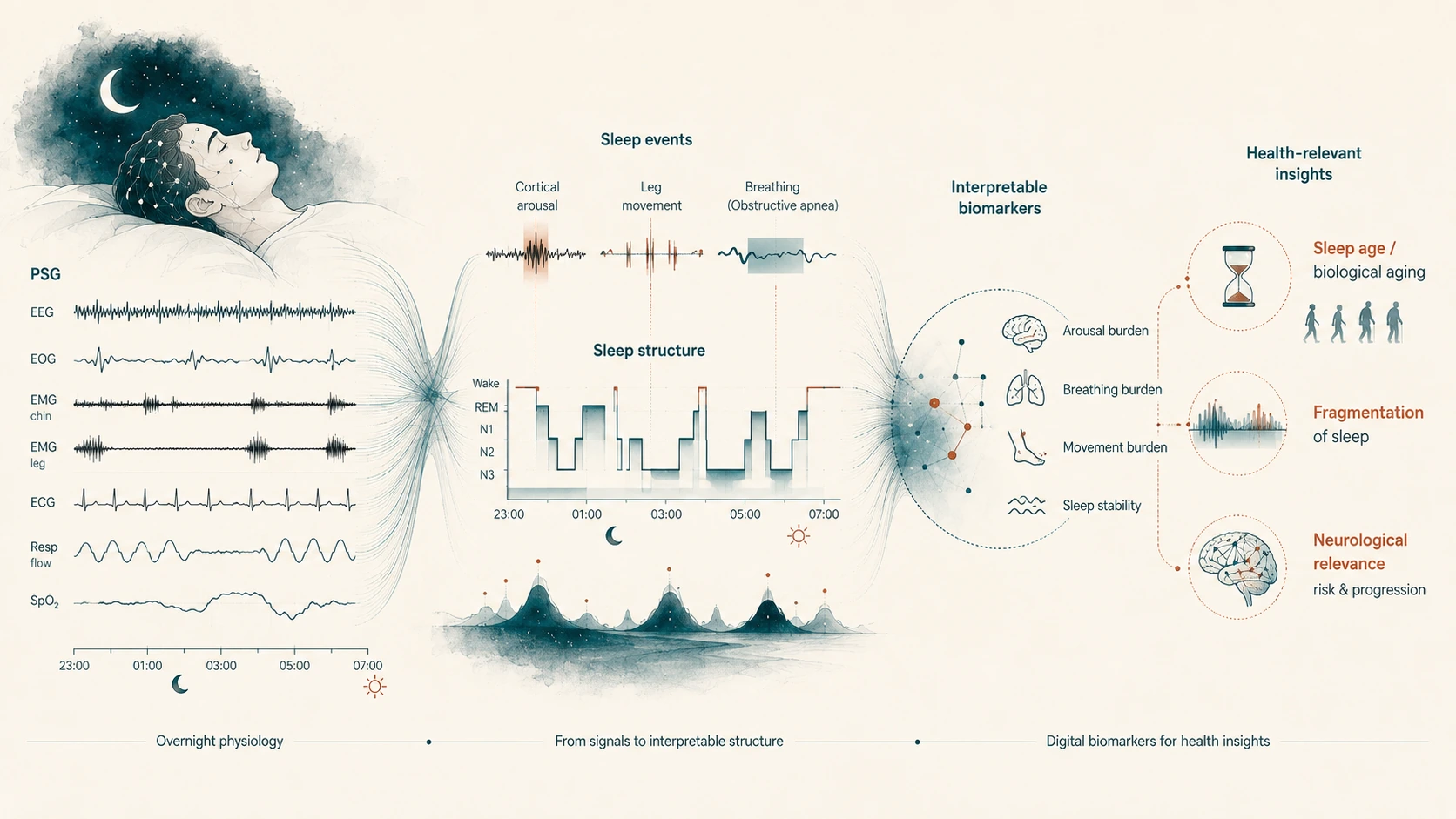
Sleep carries a dense, non-invasively recorded signal of physiological and neurological health. This theme develops interpretable, deep-learning-based markers of sleep health, aging, fragmentation, and neurological disease directly from polysomnography and related physiological recordings, organized around two complementary strands of work: detecting the individual clinical events that make up a sleep study, and characterizing what a whole night — or a whole cohort — of those events says about a person’s health.
The first strand, automated sleep event detection, builds the scoring systems a sleep study depends on — the events a technologist would otherwise annotate by hand. The second, whole-night biomarkers and phenotyping, moves past individual events toward summary measures of a full recording, from a single “sleep age” estimate to a foundation model trained across very large clinical cohorts.